Mercury Emissions News Update: What Changed and What to Watch in 2026

Canada announced a new greenhouse gas emissions reduction target in December 2024, committing to cut emissions by 45-50% below 2005 levels by 2035. This represents a significant acceleration from the existing 2030 goal of 40-45% reduction and sets the stage for sweeping changes across Canada’s tech and industrial sectors.
The updated target carries legal weight under the Canadian Net-Zero Emissions Accountability Act, which requires each new emissions goal to match or exceed Canada’s commitments under the Paris Agreement. With Canada’s 2024 emissions sitting at 685 megatonnes of carbon dioxide equivalent, already …
How Vancouver Startup Founders Can Prepare for an Acquisition Exit in 2026

Preparing for an acquisition exit demands careful orchestration across legal, financial, and operational domains, typically requiring six to twelve months of focused groundwork before entering serious negotiations. Vancouver founders who begin preparation early secure better valuations, smoother due diligence processes, and stronger negotiating positions than those who scramble when a buyer appears.
The city’s tech ecosystem has matured considerably in recent years, with serial acquirers regularly scanning Vancouver’s enterprise software, gaming, and cleantech sectors for promising targets. Yet many founders …
Greenhouse Gas Emissions by Industry: What Changed in Canada’s 2026 Policy Landscape and What to Watch

Canada’s greenhouse gas emissions landscape shifted significantly in December 2024 when the federal government committed to reducing emissions by 40-45% below 2005 levels by 2030, and simultaneously unveiled an even more ambitious 2035 target of 45-50% reduction. These policy updates matter because Canada’s industrial sectors, collectively responsible for the vast majority of the country’s 685 megatonnes of carbon dioxide equivalent emitted in 2024, now face accelerated timelines for transformation. For entrepreneurs, investors, and policymakers navigating Canada’s tech ecosystem, understanding which industries …
Ontario’s Industrial Skills Gap: Why Power Engineering Faces a Critical Workforce Shortage
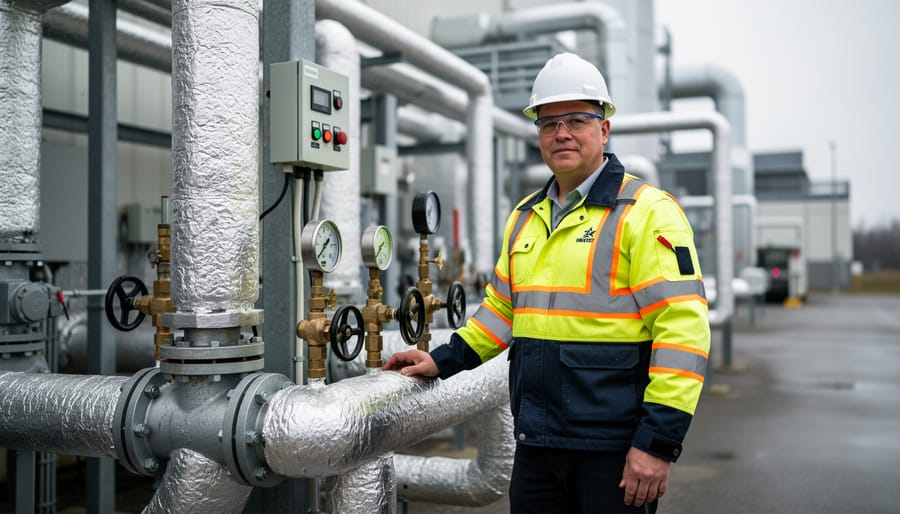
Ontario faces a critical shortage of power engineers that threatens the province’s industrial competitiveness, energy infrastructure reliability, and economic growth. Power engineers are the certified professionals who operate, maintain, and troubleshoot the boilers, pressure vessels, refrigeration systems, and energy generation equipment that keep hospitals, manufacturing plants, universities, data centres, and commercial buildings running. Without them, facilities cannot legally or safely operate their heating, cooling, and power systems.
The numbers tell a stark story. Industry estimates suggest Ontario will need …
Research About Canada: How Academic Work is Shaping the Country’s Tech Future

Canada’s research ecosystem generates more than $40 billion in annual R&D investment and serves as the engine behind the country’s technology sector, transforming university labs and government facilities into commercial ventures that compete globally. This research infrastructure spans 150+ universities, 60+ federal research institutions, and hundreds of private labs, creating a pipeline where fundamental discoveries in artificial intelligence, quantum computing, clean technology, and biotechnology evolve into scalable businesses.
The relationship between academic research and commercial technology in Canada …
The 3 Greenhouse Gases Reshaping Climate Policy and Tech Innovation

The three primary greenhouse gases driving climate change and international policy action are carbon dioxide (CO₂), methane (CH₄), and nitrous oxide (N₂O). Together, these gases account for the vast majority of anthropogenic warming, each with distinct sources, atmospheric lifespans, and warming potentials that shape how governments and businesses approach emissions reduction.
Carbon dioxide dominates climate conversations because of its sheer volume. Fossil fuel combustion, industrial processes, and deforestation pump roughly 37 billion tonnes of CO₂ into the atmosphere annually. While it has a lower warming potential per …
How the Canadian Institute for Advanced Research Is Reshaping Canada’s Tech Innovation

The Canadian Institute for Advanced Research (CIFAR) stands as one of Canada’s most consequential research organizations, transforming how collaborative, interdisciplinary scholarship drives technological and economic advancement. Since its founding in 1982, CIFAR has pioneered a distinctive model: it doesn’t operate laboratories or grant degrees, but instead convenes the world’s brightest researchers across borders and disciplines to tackle humanity’s most complex challenges. This approach has yielded extraordinary returns for Canada’s innovation economy, most notably in artificial intelligence, where CIFAR&#…
Why Most Canadian Startups Fail at Marketing (And How Yours Won’t)

Allocate 70% of your initial marketing budget to one or two channels where your ideal customers actively spend time, rather than spreading resources thin across multiple platforms. Canadian startups like Shopify and Wealthsimple achieved early traction by mastering single channels—content marketing and referral programs respectively—before expanding their reach.
Build your marketing foundation on authentic customer conversations, not assumptions. Conduct 20-30 problem-discovery interviews with your target market within your first 90 days, documenting exact phrases customers use to describe their pain points. This language …
Selling Your Fixer-Upper Fast: How Canadian Tech Platforms Are Disrupting the As-Is Home Market

Canada’s real estate landscape is undergoing a digital transformation that’s reshaping how homeowners handle distressed properties. Traditional selling methods often force owners of deteriorating homes into costly renovation cycles before listing, creating financial strain and extended timelines. A growing cohort of technology-enabled marketplaces is dismantling this paradigm by connecting sellers directly with cash buyers, investors, and specialized service providers who purchase properties in their current state.
These platforms leverage data analytics, automated valuation models, and streamlined transaction workflows …
Canadian Startups Race to Dominate the THCP Market Before It Explodes

Canada’s cannabis innovation landscape is experiencing a seismic shift as a new wave of technology startups races to commercialize THCP—a rare cannabinoid reportedly up to 33 times stronger than THC drinks and gummiesin binding affinity to CB1 receptors. These ventures are positioning the country at the forefront of next-generation cannabis science, merging advanced extraction technologies, precision biotechnology, and artificial intelligence to unlock therapeutic and recreational applications that were previously impossible.
The emergence of THCP-focused …