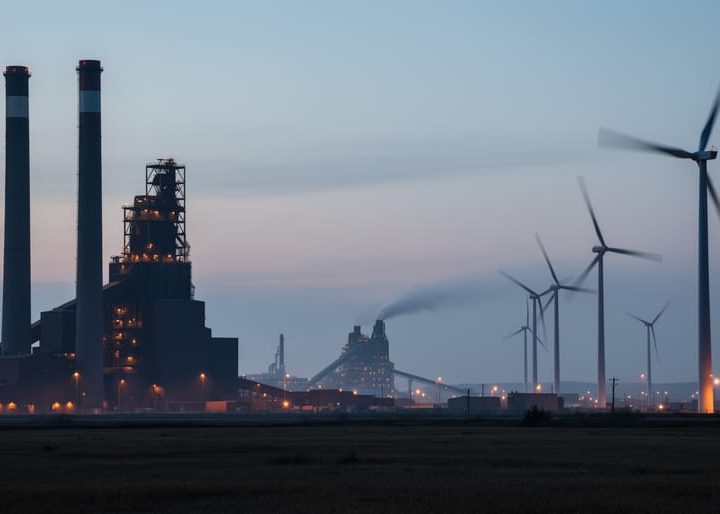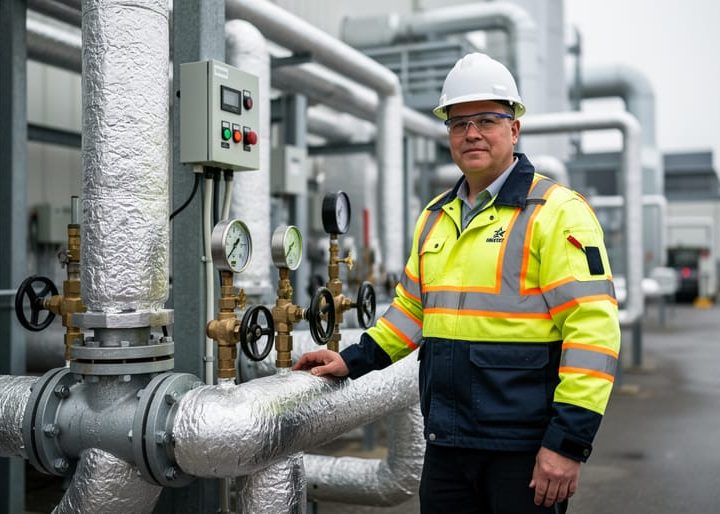

Canada announced a new greenhouse gas emissions reduction target in December 2024, committing to cut emissions by 45-50% below 2005 levels by 2035. This represents a significant acceleration from the existing 2030 goal of 40-45% reduction and sets the stage for sweeping changes across Canada’s tech and industrial sectors.
The updated target carries legal weight under the Canadian Net-Zero Emissions Accountability Act, which requires each new emissions goal to match or exceed Canada’s commitments under the Paris Agreement. With Canada’s 2024 emissions sitting at 685 megatonnes of carbon dioxide equivalent, already 10% below 2005 levels, the country now needs to find an additional 35-40% reduction in just over a decade.
For Canada’s tech ecosystem, this policy shift opens substantial opportunities in cleantech, carbon accounting software, emissions monitoring systems, and green infrastructure. Companies building solutions in renewable energy integration, industrial decarbonization, and climate adaptation technologies will find expanded market demand as businesses scramble to comply with tightening regulations. The target was shaped by scientific research, Indigenous knowledge, and public consultations, signaling that government procurement and incentive programs will likely prioritize solutions that address multiple stakeholder concerns.
The timing matters. As global climate commitments intensify and other jurisdictions set comparable targets, Canadian innovators who move quickly can establish competitive advantages in domestic and export markets. The question facing entrepreneurs and investors isn’t whether decarbonization will accelerate, but which technologies and business models will capture the value created by this mandatory transition.
What Changed: Canada’s 2035 Target and Mercury Reduction Implications
In December 2024, Canada raised the stakes for industrial polluters by announcing Canada’s 2035 target: a 45-50% reduction in greenhouse gas emissions below 2005 levels. This marks a significant acceleration from the existing 2030 goal of 40-45%, compressing the timeline for sectors that have long relied on fossil fuel combustion and energy-intensive processes. For context, Canada’s emissions stood at 685 megatonnes of carbon dioxide equivalent in 2024, down 10% from 2005 levels, meaning the country must now cut emissions by roughly another 35-40 percentage points in just over a decade.
This intensified ambition directly impacts mercury emission controls because mercury is a stubborn co-pollutant released alongside greenhouse gases when coal, heavy oil, and certain industrial feedstocks burn. Power plants, cement kilns, metal smelters, and waste incinerators all release mercury vapor into the atmosphere during combustion and processing, making them dual targets under both climate and toxics regulation. As Canada phases out high-emission energy sources and tightens industrial standards to meet the 2035 benchmark, facilities will need to install or upgrade mercury capture systems, electrostatic precipitators, activated carbon injection, and scrubbers, in tandem with carbon reduction measures.
The connection between GHGs and tech becomes especially clear in sectors where cutting carbon dioxide, methane, and nitrous oxide automatically reduces mercury release. Replacing coal-fired power with renewables or natural gas eliminates the primary mercury source; switching cement production to alternative fuels or carbon capture systems lowers both CO₂ and heavy metal emissions. For Canadian clean-tech companies, this policy convergence creates a dual market: solutions that address climate targets while controlling mercury pollution deliver compounded value to industrial clients and attract both environmental and climate-focused investment capital.
Key Developments Shaping Mercury Emission Policy
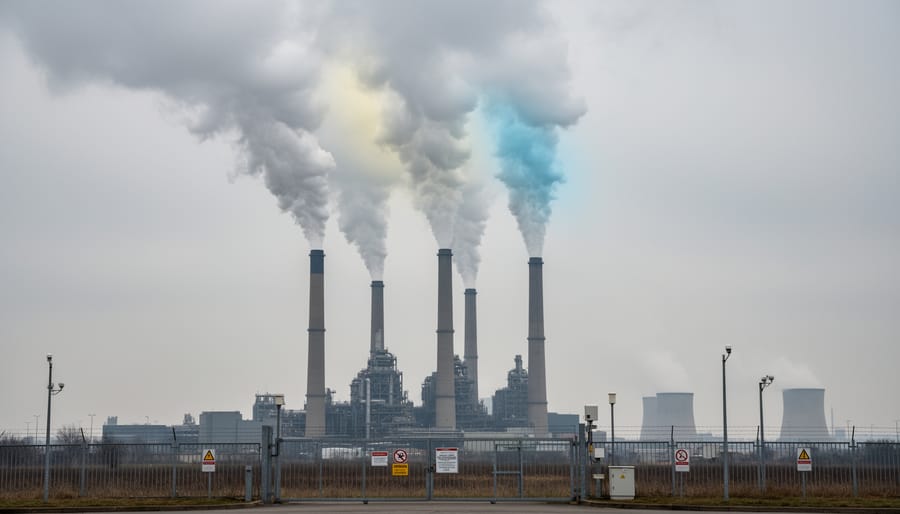
1. Strengthened National Accountability Under the Canadian Net-Zero Emissions Accountability Act
The Canadian Net-Zero Emissions Accountability Act establishes a binding legal framework that ratchets up Canada’s climate ambition over time. Under this legislation, every greenhouse gas emissions reduction target the government sets must be as ambitious as its NDC submitted under the Paris Agreement. This means the December 2024 announcement of a 45-50% reduction below 2005 levels by 2035 isn’t just a policy aspiration; it’s a legally mandated floor that subsequent targets cannot fall below.
For industrial sectors, this accountability mechanism creates predictable, long-term signals that drive investment in emission reduction technologies. Mercury and other co-pollutants from fossil fuel combustion and industrial processes fall under the same regulatory umbrella. When power plants, cement kilns, and smelters reduce their greenhouse gas emissions, they simultaneously cut mercury releases. The Act’s requirement for progress reports and independent advisory panels means companies can’t defer action. They need monitoring systems, abatement technologies, and process upgrades now to meet interim milestones before 2035.
This framework rewards early movers. Canadian clean-tech firms developing mercury capture systems, real-time emission monitoring platforms, and industrial process optimization tools have a growing domestic market with enforceable compliance deadlines. The legal certainty also attracts venture capital and project financing, since investors can model regulatory risk and market demand with greater confidence than in jurisdictions relying on voluntary measures alone.
2. Integration of Indigenous Knowledge and Public Consultation in Target-Setting
Canada’s December 2024 announcement of the 2035 greenhouse gas reduction target marked a significant evolution in how the country develops environmental policy. The target wasn’t simply modelled in government offices, it emerged from a deliberate process that combined academic research international climate commitments, Indigenous knowledge systems, and direct public input. This multi-stakeholder approach reflects a growing recognition that effective emission controls, including mercury co-pollutant reduction, require diverse perspectives and local expertise.
Indigenous communities have contributed crucial knowledge about mercury’s impacts on ecosystems and food chains, particularly in regions where traditional fishing and hunting remain vital. Their observations of environmental changes over generations provide context that complements scientific monitoring data. Several Canadian tech companies have developed platforms that enable Indigenous communities to share environmental observations directly with policymakers, creating feedback loops that inform both target-setting and implementation strategies.
Public consultations conducted throughout 2024 gathered input from industry, environmental groups, and citizens on the feasibility and ambition of emission reduction pathways. Canadian innovations in digital consultation platforms have improved transparency in this process, allowing stakeholders to track how their input shaped policy decisions. These same platforms are now being adapted for mercury monitoring data collection, enabling real-time reporting from industrial facilities and creating accountability mechanisms that support both greenhouse gas and mercury reduction goals. The integration of diverse knowledge sources strengthens Canada’s approach to environmental policy while creating opportunities for clean-tech solutions that address community-identified needs.
3. International Coordination Through the Minamata Convention and Paris Agreement
Canada operates at the intersection of two major international environmental frameworks: the Minamata Convention on Mercury and the Paris Agreement on climate change. While the Paris Agreement focuses on reducing greenhouse gas emissions to limit global temperature rise, the Minamata Convention targets mercury pollution across its lifecycle, from mining to disposal. These treaties converge because many mercury emission sources, particularly coal-fired power plants and industrial facilities burning fossil fuels, are also significant greenhouse gas emitters. When Canada implements measures to achieve its 2035 target of 45-50% emissions reduction below 2005 levels, it simultaneously creates conditions for mercury reduction.
This dual-framework approach opens substantial opportunities for Canadian clean-tech innovators. Technologies that capture or eliminate emissions from industrial processes can address both mercury and carbon dioxide in a single solution, making them more attractive to international buyers facing multiple compliance requirements. Canadian companies developing advanced monitoring systems, emission capture technologies, and industrial process optimization tools can position their solutions as meeting two distinct regulatory mandates.
The convergence also strengthens Canada’s competitive position in global clean-tech markets. Countries worldwide face similar dual obligations under both conventions, creating demand for integrated solutions rather than separate mercury and greenhouse gas controls. Canadian entrepreneurs who design technologies addressing both pollutants simultaneously can access broader market opportunities and secure stronger intellectual property positions. The alignment of international greenhouse gas emission policies with mercury reduction frameworks represents a structural advantage for innovation-focused companies that understand the technical and regulatory connections between these environmental challenges.
4. Technology and Innovation Opportunities for Canadian Startups
Canada’s drive toward a 45-50% emissions cut by 2035 creates a substantial market for technologies that simultaneously reduce greenhouse gases and co-pollutants like mercury. Clean-tech startups have a window to scale solutions that address both priorities at once, and Canadian companies are positioning themselves across the value chain, from industrial capture systems and real-time monitoring platforms to data analytics that help facilities demonstrate compliance with tightening standards.
Emission-control innovation draws investor interest because regulatory timelines are clear and procurement budgets are committed. Companies developing mercury capture retrofits for coal-fired plants and industrial boilers, continuous emission monitoring sensors, and air-quality modeling software find ready customers among utilities, manufacturers, and municipalities facing stricter reporting requirements. The overlap between greenhouse gas and mercury reduction means a single technology investment can satisfy multiple compliance obligations, improving the return profile for both startups and their backers.
Venture capital and government funding increasingly target emission-measurement and abatement technologies. Clean-tech accelerators in Toronto, Vancouver, and Calgary report rising deal flow in environmental monitoring, process optimization, and industrial electrification, all relevant to mercury reduction as facilities transition away from fossil fuel combustion. Export potential is significant: countries updating their Paris Agreement commitments face similar co-pollutant challenges, giving Canadian solutions an addressable market beyond domestic compliance. Startups that move quickly to pilot and certify technologies before 2030 interim targets take effect stand to capture early-mover advantages in both domestic and international markets.
Why Mercury Emission Controls Matter to Canada’s Tech Ecosystem

Canada’s commitment to slashing greenhouse gas emissions by 45-50% below 2005 levels by 2035 creates substantial economic opportunities for the country’s clean-tech sector. Mercury emission controls, though often overshadowed by carbon dioxide targets, represent a critical market niche where Canadian innovation can deliver both environmental impact and competitive advantage. Industries required to reduce mercury as a co-pollutant, coal-fired power generation, cement production, non-ferrous metal smelting, and waste incineration, need advanced technologies to meet compliance deadlines, opening doors for entrepreneurs and investors focused on emission-control solutions.
The regulatory landscape acts as a catalyst for several high-growth sectors:
- Emission monitoring technologies that provide real-time mercury tracking and reporting
- Industrial process optimization platforms reducing both mercury and greenhouse gas outputs
- Data analytics tools enabling predictive compliance and operational efficiency
- Regulatory technology (regtech) software automating reporting and documentation
- Carbon credit and environmental attribute trading systems integrating mercury reductions
These opportunities extend beyond pollution control equipment. Canadian startups developing machine learning algorithms for emission prediction, blockchain-based verification systems for environmental credits, and sensor networks for continuous monitoring can position themselves as essential partners to legacy industries undergoing transformation. The 2035 deadline means companies face compressed timelines for technology adoption, creating urgency that favors proven, scalable solutions.
For investors, mercury-related clean-tech offers portfolio diversification within the broader climate economy. Policymakers gain leverage by supporting domestic innovation that keeps capital and intellectual property within Canada while building export potential. As international jurisdictions tighten their own mercury and greenhouse gas standards under the Minamata Convention and Paris Agreement, Canadian companies with validated technologies hold first-mover advantages in global markets hungry for compliance solutions.
What to Watch: Timeline and Next Steps for Stakeholders
Between now and 2035, stakeholders across Canada’s tech ecosystem should track several interconnected policy and market developments that will shape mercury and greenhouse gas emission reduction strategies.
The most immediate milestone is the 2030 interim target (40-45% reduction), which serves as a checkpoint for the more ambitious 2035 goal. Under the Canadian Net-Zero Emissions Accountability Act, the federal government must publish emissions reduction plans and progress reports, creating transparency windows for investors and entrepreneurs to assess regulatory momentum and market readiness for clean-tech solutions.
Entrepreneurs developing mercury capture technologies or emission monitoring platforms should watch for funding announcements tied to industrial decarbonization. Federal and provincial grant programs typically align with these statutory reporting cycles, opening capital windows for companies ready to deploy solutions at scale. The integration of Indigenous knowledge and public consultation processes into target-setting also signals opportunities for community-based monitoring technologies and data platforms that enhance stakeholder engagement.
Investors should monitor international policy harmonization, particularly where Canada’s dual commitments under the Minamata Convention on Mercury and the Paris Agreement create competitive advantages for domestic clean-tech firms. As other jurisdictions align their standards, Canadian companies with proven emission-reduction technologies gain export potential.
Policymakers need to track industry GHG changes across energy, manufacturing, and resource sectors, where mercury is a significant co-pollutant. Sector-specific regulations will emerge as Canada refines its pathway to the 2035 target, creating implementation timelines that determine technology adoption rates and infrastructure investment needs.
Technology deployment windows between 2026 and 2030 are critical. Companies must move from pilot to commercial scale during this period to influence the trajectory toward 2035 targets, making the next four years decisive for market positioning.
Common Questions About Mercury Emissions and Climate Policy
How do mercury emissions relate to Canada’s greenhouse gas reduction targets?
Mercury is a co-pollutant released primarily from fossil fuel combustion and industrial processes that also produce greenhouse gases. When Canada reduces emissions to meet its 45-50% reduction target by 2035, many of the same interventions, such as transitioning away from coal-fired power and improving industrial efficiency, simultaneously cut mercury releases.
Which sectors are most affected by mercury emission controls?
Energy generation (particularly coal-fired plants), metal smelting, cement production, and waste incineration are the primary sources of industrial mercury emissions in Canada. These sectors face dual pressure from both greenhouse gas reduction policies and mercury-specific regulations under the Minamata Convention.
What technologies can reduce mercury emissions?
Activated carbon injection, flue gas desulfurization systems, electrostatic precipitators, and fabric filters effectively capture mercury from industrial exhaust streams. Canadian cleantech companies are also developing real-time monitoring systems and advanced sorbent materials that improve capture efficiency and reduce operating costs.
How does the 2035 target affect investment timelines for emission control technology?
The 2035 deadline creates a clear market signal for industrial facilities to deploy emission reduction technologies within the next decade. Investors can expect accelerated procurement cycles between now and 2030 as companies move to meet interim reporting requirements and avoid regulatory penalties.
Understanding these fundamentals helps tech entrepreneurs identify where their solutions fit within the regulatory landscape and enables investors to evaluate market timing for emission control ventures. The intersection of climate policy and mercury reduction creates a sustained demand window rather than a short-term compliance rush, particularly as the Canadian Net-Zero Emissions Accountability Act requires each successive target to be as ambitious as the previous commitment. This accountability framework means companies that position themselves early in the technology deployment cycle stand to benefit from multiple regulatory waves as standards tighten toward 2050.

Canada’s twin pursuit of greenhouse gas reduction and mercury emission controls demonstrates how integrated environmental policy can accelerate both climate action and industrial innovation. The December 2024 announcement of a 45-50% reduction target by 2035 sets a clear trajectory for Canadian clean-tech companies to develop solutions that address multiple pollutants simultaneously, creating competitive advantages in domestic and international markets.
The intersection of the Canadian Net-Zero Emissions Accountability Act, the Minamata Convention commitments, and Indigenous knowledge integration establishes a policy framework that rewards innovation rather than simply mandating compliance. For entrepreneurs and investors, this creates predictable regulatory horizons and substantial market opportunities in emission monitoring, capture technologies, and industrial process optimization.
Canadian innovators are well-positioned to lead in clean-tech solutions that deliver measurable results for both climate targets and mercury reduction. The country’s established expertise in environmental monitoring, strong research institutions, and supportive policy environment provide a foundation for technologies that can scale globally. As international coordination between climate and mercury policies strengthens, Canada’s early investments in integrated approaches position its tech ecosystem to capture value in an expanding market for comprehensive emission control solutions.