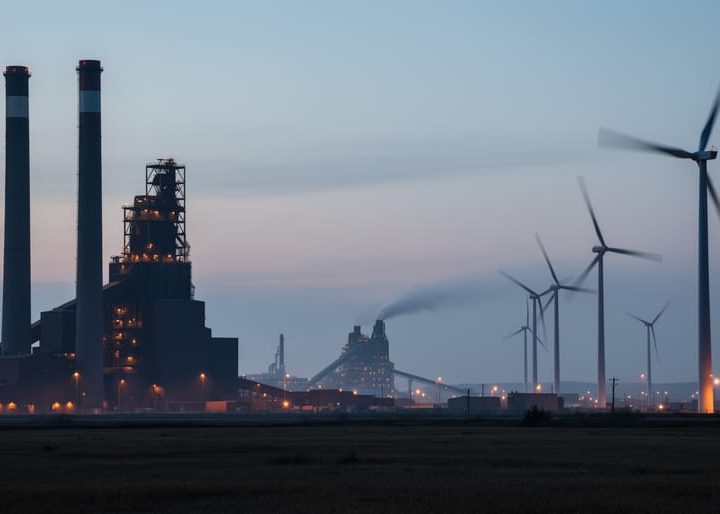

Canada’s greenhouse gas emissions landscape shifted significantly in December 2024 when the federal government committed to reducing emissions by 40-45% below 2005 levels by 2030, and simultaneously unveiled an even more ambitious 2035 target of 45-50% reduction. These policy updates matter because Canada’s industrial sectors, collectively responsible for the vast majority of the country’s 685 megatonnes of carbon dioxide equivalent emitted in 2024, now face accelerated timelines for transformation. For entrepreneurs, investors, and policymakers navigating Canada’s tech ecosystem, understanding which industries produce emissions and how policy frameworks are reshaping competitive dynamics isn’t optional anymore.
The reality check: Canada’s emissions dropped only 0.3% between 2023 and 2024, and despite a 10.3% reduction since 2005, the country has increased total emissions by 12.6% since 1990. This slow progress against ambitious targets creates both pressure and opportunity. The interim 2026 goal, a 20% reduction below 2005 levels announced in the March 2022 Emissions Reductions Plan, is rapidly approaching, making the next few months critical for sectoral accountability.
This policy acceleration directly impacts how Canadian businesses innovate, where capital flows, and which technologies gain competitive advantage. The three greenhouse gases driving climate policy, carbon dioxide, methane, and nitrous oxide, originate disproportionately from specific industrial sectors. Understanding this distribution reveals where regulatory pressure will intensify and where Canadian innovators are building solutions that position the country as a climate tech leader on the global stage.
What Changed: Recent Policy Developments Affecting Industrial Emissions
Canada’s industrial emission landscape shifted decisively between 2022 and 2024, as the federal government layered new reduction targets atop existing commitments. December 2024 brought the headline announcement: a formal 2030 target of 40-45% below 2005 levels, paired with a 2035 target of 45-50% reduction using the same baseline. These commitments cascade directly to sector-level planning, forcing oil and gas producers, heavy manufacturers, transportation operators, and other high-emitting industries to accelerate decarbonization roadmaps or face regulatory pressure.
The policy architecture now includes the March 2022 interim checkpoint requiring a 20% reduction by 2026, just two years away. That milestone matters for near-term compliance and investment decisions. Meanwhile, 2024 emissions registered 685 megatonnes of carbon dioxide equivalent, down 0.3% from 2023’s 687 megatonnes. The arithmetic is stark: Canada achieved a 10.3% cumulative reduction over nineteen years (2005-2024), yet must now triple that pace to meet 2030 obligations. For industries accounting for the bulk of those 685 megatonnes, the question is no longer whether policy will tighten, but how quickly and which sectors absorb the deepest cuts.
1. Canada’s Updated 2030 and 2035 Emission Reduction Targets
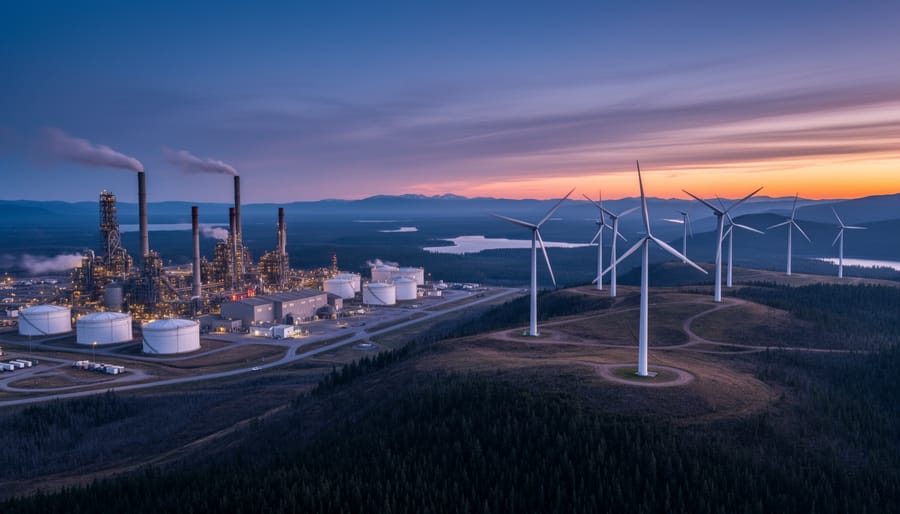
In December 2024, Canada raised the bar on its climate commitments, setting a dual-target framework that will shape industrial planning for the next decade. The December 2024 commitment locked in a 2030 target of 40-45% emission reductions below 2005 levels, alongside a new 2035 target of 45-50% below the same baseline. These aren’t aspirational goals, they translate directly into sectoral obligations that industry will need to meet through a combination of regulation, carbon pricing mechanisms, and technology deployment.
To understand the scale of the challenge, consider where Canada stands today. Total emissions reached 685 megatonnes in 2024 a modest 0.3% drop from 2023’s 687 megatonnes. Since adopting 2005 as the baseline year following the Paris Agreement in 2015, Canada has achieved a 10.3% reduction, 78 megatonnes of carbon dioxide equivalent. That progress, while real, leaves a significant gap: to hit the low end of the 2030 range (40% reduction), Canada needs to cut an additional 196 megatonnes within six years.
The timeline of Canada’s evolving climate ambition looks like this:
- 2005 baseline established (763 megatonnes of CO₂ equivalent)
- 2015: Paris Agreement signed, committing Canada to the 2005 reference year
- March 2022: Interim objective set at 20% reduction by 2026
- 2030 target: 40-45% reduction below 2005 levels
- 2035 target: 45-50% reduction below 2005 levels
- Current progress: 10.3% reduction achieved (685 megatonnes in 2024)
For sectors like oil and gas, heavy industry, and transportation, collectively responsible for the majority of national emissions, these targets create planning imperatives. Each industry now faces implicit carbon budgets that will tighten year by year. The 2026 interim checkpoint (20% reduction) serves as an early test of whether Canada’s policy mix is working or whether more aggressive sector-specific regulations will be needed. Companies that treat these targets as distant abstractions risk being caught flat-footed when enforcement mechanisms tighten; those investing now in low-carbon processes, emissions monitoring, and efficiency gains position themselves ahead of compliance curves and unlock access to green capital markets.
2. Sectoral Emissions Performance and Industry-Specific Pressures
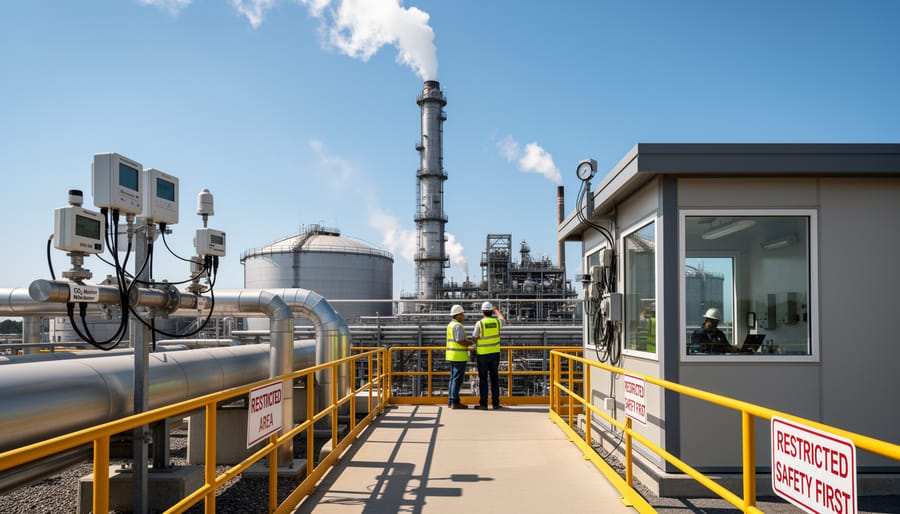
Canada’s greenhouse gas footprint in 2024-685 megatonnes of carbon dioxide equivalent, tells a story of uneven progress across industries. While the nation has achieved a 10.3% reduction since 2005, that modest decline masks dramatic variations in sectoral performance. Some industries have restructured and decarbonized; others remain stubbornly carbon-intensive, facing the steepest climb toward the 40-45% reduction required by 2030.
The oil and gas sector continues to dominate Canada’s emissions profile, accounting for roughly a quarter of the national total. Despite incremental efficiency gains, production growth has largely offset technological improvements. This sector faces intense pressure: meeting national targets without crippling output demands rapid deployment of carbon capture technology, methane reduction measures, and operational redesign. For cleantech entrepreneurs, this translates to substantial market opportunity, but also a need for startup marketing strategies that speak directly to risk-averse industrial buyers and navigate complex procurement cycles.
Transportation presents a mixed picture. Light-duty vehicle emissions have begun to decline as electric vehicle adoption accelerates, supported by federal incentives and tightening fuel standards. Heavy-duty freight, aviation, and marine transport lag significantly. These subsectors face technical and economic barriers that battery electrification alone won’t solve, creating demand for alternative fuels, logistics optimization software, and emissions tracking platforms.
Buildings, encompassing residential, commercial, and institutional structures, have seen moderate improvement through better insulation standards and heating system upgrades. Yet the existing building stock, much of it heated by natural gas, represents a persistent challenge. Retrofitting millions of structures requires both capital and coordinated policy, an area where financing innovation and energy management technology can make measurable impact.
Heavy industry, including steel, cement, and petrochemicals, operates under inherent process constraints. Many emissions stem from chemical reactions, not just energy use, making decarbonization technically complex and capital-intensive. Progress here will hinge on industrial-scale carbon capture, hydrogen integration, and process redesign, all areas where patient capital and policy certainty are critical.
Electricity generation has been a relative success story, particularly in provinces with hydroelectric or nuclear baseload. Remaining coal-fired plants are being phased out, though the grid must still accommodate intermittent renewables and rising demand from electrification efforts.
Agriculture’s emissions, largely from livestock and soil management, remain relatively stable. Mitigation strategies, improved feed, precision agriculture, and methane capture, advance slowly, constrained by farm economics and diffuse implementation challenges.
3. International Alignment and Competitiveness Considerations
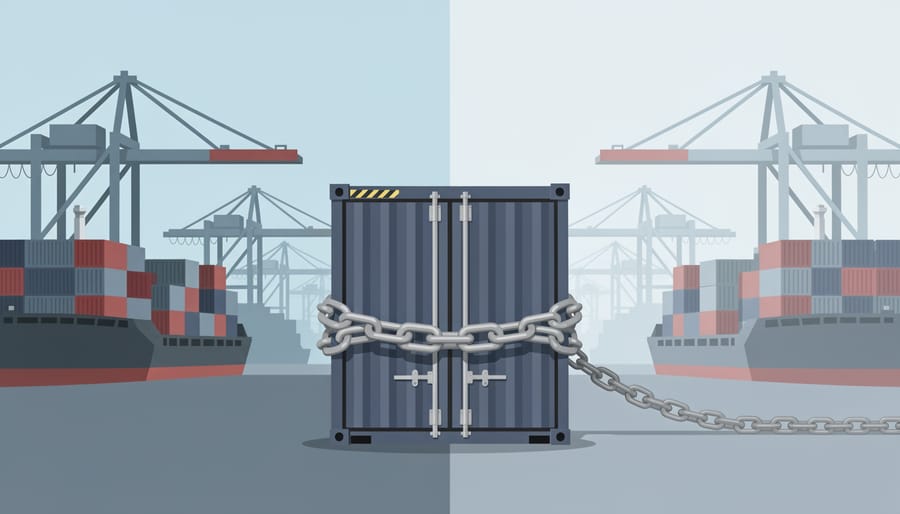
Canada’s emission reduction targets sit within a broader international architecture shaped by the Paris Agreement, which established a common framework while allowing individual nations to set their own pathways. The 40-45% reduction below 2005 levels by 2030 positions Canada roughly in line with commitments from peer economies, though the comparison reveals important nuances. The European Union has pledged at least 55% below 1990 levels by 2030, which translates to a steeper trajectory given the earlier baseline. Australia committed to 43% below 2005 levels by 2030, while the United States aims for 50-52% below 2005 levels by the same deadline. These differences reflect varying national circumstances, industrial structures, and political consensus around climate action.
The real friction emerges when comparing sectoral policies rather than headline targets. Canada’s carbon pricing system, currently at $80 per tonne and scheduled to rise to $170 by 2030, operates alongside sector-specific regulations for oil and gas, transportation, and heavy industry. The EU’s Emissions Trading System covers a wider share of the economy and has driven deeper industrial transformation in cement, steel, and chemicals. American policy remains more fragmented, with the Inflation Reduction Act creating substantial clean energy incentives but no federal carbon price. For Canadian manufacturers competing in export markets, this patchwork creates asymmetry: domestic compliance costs that may not be matched by foreign rivals.
Carbon-intensive sectors, particularly steel, aluminum, fertilizers, and cement, face acute competitiveness pressure. These industries operate on thin margins in global markets where carbon costs can determine profitability. The Canadian Institute for Advanced Research and similar institutions have contributed academic work analyzing how border carbon adjustments could level the playing field by applying equivalent charges to imports from countries without comparable climate policies. The EU implemented its Carbon Border Adjustment Mechanism in 2023, initially covering iron, steel, cement, fertilizers, and electricity. Canada has signaled interest in similar tools but faces complexity given integration with the U.S. economy. Trade policy will increasingly intertwine with emission reduction strategies, creating both risk and opportunity for Canadian industry.
Why It Matters: Implications for Canada’s Tech Ecosystem and Economy
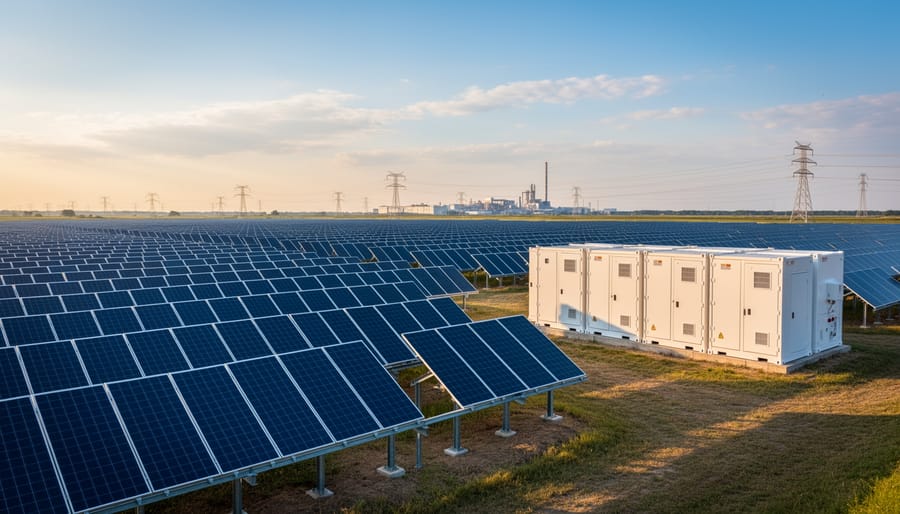
The gap between Canada’s current emissions trajectory and its 2030 target represents more than a climate policy challenge, it’s a multi-billion-dollar market signal reshaping Canada’s tech landscape. With 685 megatonnes recorded in 2024 and a mandate to cut 40-45% below 2005 levels within six years, every industrial sector must accelerate decarbonization. That urgency translates directly into demand for technology: sensors that quantify methane leaks in real time, software that optimizes building energy loads, platforms that verify emission offsets, and hardware that captures carbon at the smokestack.
For entrepreneurs, this policy framework creates a clear playing field. Regulatory certainty around sectoral caps, carbon pricing floors, and compliance timelines allows startups to forecast customer budgets and adoption curves with greater confidence than exists in many peer markets. Industries facing the steepest reduction requirements, oil and gas, heavy manufacturing, transportation, are actively scouting solutions, and procurement cycles that once took years are compressing as 2026 interim checkpoints and 2030 deadlines loom. Canada’s tech innovation is gaining momentum across several critical areas:
- Industrial decarbonization solutions targeting process heat, chemical feedstocks, and emissions-intensive manufacturing
- Emissions tracking platforms offering granular, verifiable measurement for compliance and voluntary markets
- Renewable energy integration technology managing grid stability and distributed generation
- Carbon accounting software enabling enterprises to report scope 1, 2, and 3 emissions accurately
- Electric vehicle infrastructure from charging networks to fleet management systems
- Green hydrogen production, storage, and distribution technologies for hard-to-abate sectors
Venture capital is responding. Climate-focused funds have grown Canadian allocations since the 2022 Emissions Reduction Plan introduced sectoral pathways, and corporate venture arms from incumbent industrials are backing startups that de-risk their own compliance strategies. The combination of domestic policy ambition and international alignment under the Paris Agreement positions Canadian cleantech for export: solutions proven in Alberta’s oil sands or Ontario’s manufacturing corridor carry credibility in other jurisdictions wrestling with similar industrial emission profiles.
Policy uncertainty remains a wildcard. Changes in federal or provincial leadership, adjustments to carbon pricing mechanisms, or delays in sectoral regulation can freeze capital deployment and stall customer commitments. Startups operating at the technology-policy interface must build flexibility into their models, diversify revenue streams, and maintain cash reserves to weather political cycles. The opportunity is substantial, but timing and adaptability will separate winners from well-intentioned ventures that run out of runway before mandates fully materialize.
Canadian Innovation Success Stories in Emission Reduction
Canadian companies are turning emission reduction challenges into competitive advantages, developing technology that addresses sector-specific constraints while advancing national and international climate goals. These innovators demonstrate how targeted solutions can bridge the gap between current emissions, 685 megatonnes in 2024, and Canada’s 2030 targets.
CarbonCure Technologies has deployed its concrete carbonization system across hundreds of ready-mix plants in North America, permanently sequestering CO₂ in building materials during production. The company’s approach tackles emissions in the heavy industry sector while strengthening concrete performance, proving that emission reduction can enhance rather than compromise product quality. Each cubic metre of treated concrete removes measurable quantities of carbon dioxide from the atmosphere, creating a scalable pathway for one of the world’s most carbon-intensive materials.
In the oil and gas sector, where Canada faces some of its steepest reduction challenges, Titanium Corporation has developed technology to extract value from oil sands tailings while reducing emissions. Their process recovers bitumen, solvents, and minerals from waste streams, cutting the energy intensity of extraction and shrinking the environmental footprint of existing operations without requiring greenfield investment.
Hydrostor is addressing grid-scale energy storage with compressed air systems that enable renewable energy integration without lithium-ion batteries. Their facilities store excess wind and solar power in underground caverns, releasing it during peak demand to displace fossil fuel generation. This technology directly supports emission reductions in the electricity sector while solving the intermittency problem that has constrained renewable deployment.
Svante has commercialized solid sorbent carbon capture technology designed for industrial point sources. Their modular systems capture CO₂ from cement kilns, steel mills, and hydrogen production facilities at a fraction of traditional capture costs, making emission reduction economically viable for hard-to-abate sectors.
These success stories reflect broader patterns in climate policy innovation where Canadian entrepreneurs translate regulatory pressure into market opportunity. The diversity of approaches, from materials science to energy storage to industrial process optimization, shows that no single technology will close the emission gap. Instead, sector-specific solutions tailored to distinct industrial challenges are driving measurable progress across the economy.
What to Watch: Key Developments on the Horizon
Several critical junctures lie ahead that will shape how Canadian industries manage emissions and where capital flows in the cleantech sector.
Canada’s 2026 interim checkpoint represents the first major accountability moment. The government committed to a 20% reduction below 2005 levels by 2026, which translates to roughly 610 megatonnes of carbon dioxide equivalent. At 685 megatonnes in 2024, closing that gap requires an accelerated pace of reduction. Watch for mid-year assessments and potential course corrections if progress lags. This checkpoint will signal whether current policies have teeth or need reinforcement.
Federal carbon pricing mechanisms remain in flux. Court challenges, provincial resistance, and competitiveness concerns continue to pressure the system. Entrepreneurs should monitor whether the price trajectory holds at planned levels or faces caps, exemptions, or restructuring. Any weakening could reduce the business case for emission-reduction technologies, while strengthening could accelerate adoption timelines.
Sectoral regulatory frameworks are still being defined for heavy emitters. Oil and gas regulations, industrial carbon capture requirements, and methane reduction standards will determine compliance costs and technology demand. Consultations scheduled throughout 2026 will clarify obligations. Companies developing monitoring systems, carbon capture solutions, or process optimization tools should engage early in these consultations to understand market sizing and technical specifications.
International coordination presents both opportunity and risk. U.S. climate policy shifts affect Canadian competitiveness and cross-border investment flows. EU carbon border adjustments could alter trade dynamics for emissions-intensive exports. Investors should track harmonization efforts and divergence points that create arbitrage opportunities or regulatory headaches.
For navigating this uncertainty, maintain flexibility in go-to-market strategies. Build solutions that deliver value beyond regulatory compliance, cost savings, efficiency gains, or risk mitigation. Diversify sector exposure rather than betting entirely on one industry meeting targets. Most importantly, cultivate relationships with industry associations and regulators. Early insight into policy direction provides strategic advantage when capital deployment windows open.
Frequently Asked Questions
What is Canada’s current emission level and how does it compare to its targets?
Canada’s total greenhouse gas emissions in 2024 were 685 megatonnes of carbon dioxide equivalent, representing a 10.3% reduction from 2005 levels. The country committed in December 2024 to reduce emissions by 40-45% below 2005 levels by 2030 and 45-50% by 2035, meaning significant further reductions are needed to close the gap.
Which industries face the most pressure to reduce emissions?
Oil and gas, transportation, buildings, and heavy industry sectors are under the most intense scrutiny given their contribution to Canada’s emissions profile. These sectors face both regulatory pressure and market expectations to demonstrate meaningful progress toward national targets, especially as the 2026 interim checkpoint approaches.
How do international greenhouse gas policies affect Canadian companies?
International frameworks like the Paris Agreement establish baseline expectations that shape Canada’s domestic policies, creating compliance obligations that cascade to industrial operators. Canadian companies competing globally must align with international standards to maintain market access and avoid potential carbon border adjustments from trading partners.
How can startups access opportunities in industrial decarbonization?
Startups can engage through pilot programs with large emitters testing new technology, collaborate with industry associations seeking solutions, apply for government innovation funding tied to emission reduction, and partner with venture capital firms actively investing in cleantech. The key is demonstrating measurable impact on specific sectoral challenges rather than generic climate solutions.
The regulatory landscape creates concrete needs that technology companies can address. Industries struggling to meet targets are actively seeking emissions monitoring systems, process optimization software, alternative energy solutions, and carbon capture technologies. Government procurement programs and corporate sustainability commitments provide revenue pathways for validated solutions. Entrepreneurs should focus on sectors where the gap between current performance and policy requirements is widest, as that urgency translates into budget allocation and shorter sales cycles. Understanding which industries carry the heaviest compliance burden helps startups position solutions where demand is strongest and decision-makers are motivated to act.
Canada’s greenhouse gas emissions landscape sits at a crossroads where sectoral performance, international commitments, and innovation converge. With emissions at 685 megatonnes in 2024 and a 10.3% reduction achieved since 2005, the gap to the 40-45% reduction target by 2030 remains substantial. Meeting the 2035 goal of 45-50% below 2005 levels demands more than incremental progress. It requires transforming how oil and gas, transportation, heavy industry, and other major emitters operate.
Policy frameworks continue to evolve through 2026 and beyond, shaped by international alignment under the Paris Agreement and competitive pressures from trading partners. For Canada’s tech ecosystem, this evolving landscape represents a defining economic opportunity rather than merely a compliance burden. The sectors facing the steepest emission reduction challenges need solutions that Canadian entrepreneurs and innovators are uniquely positioned to deliver: carbon capture technologies, emissions monitoring platforms, energy efficiency software, and novel approaches to industrial decarbonization.
The next checkpoint arrives with the 2026 interim target, offering a near-term signal of whether current trajectories align with long-term ambitions. Entrepreneurs and investors who track regulatory developments, sectoral pressures, and emerging market incentives will identify where capital and innovation can generate both returns and impact. Canada’s competitiveness in the global transition economy depends on turning emission reduction from constraint into competitive advantage. Stay engaged as policy clarifies, opportunities crystallize, and the pathway from 685 megatonnes to a low-carbon future takes shape.